
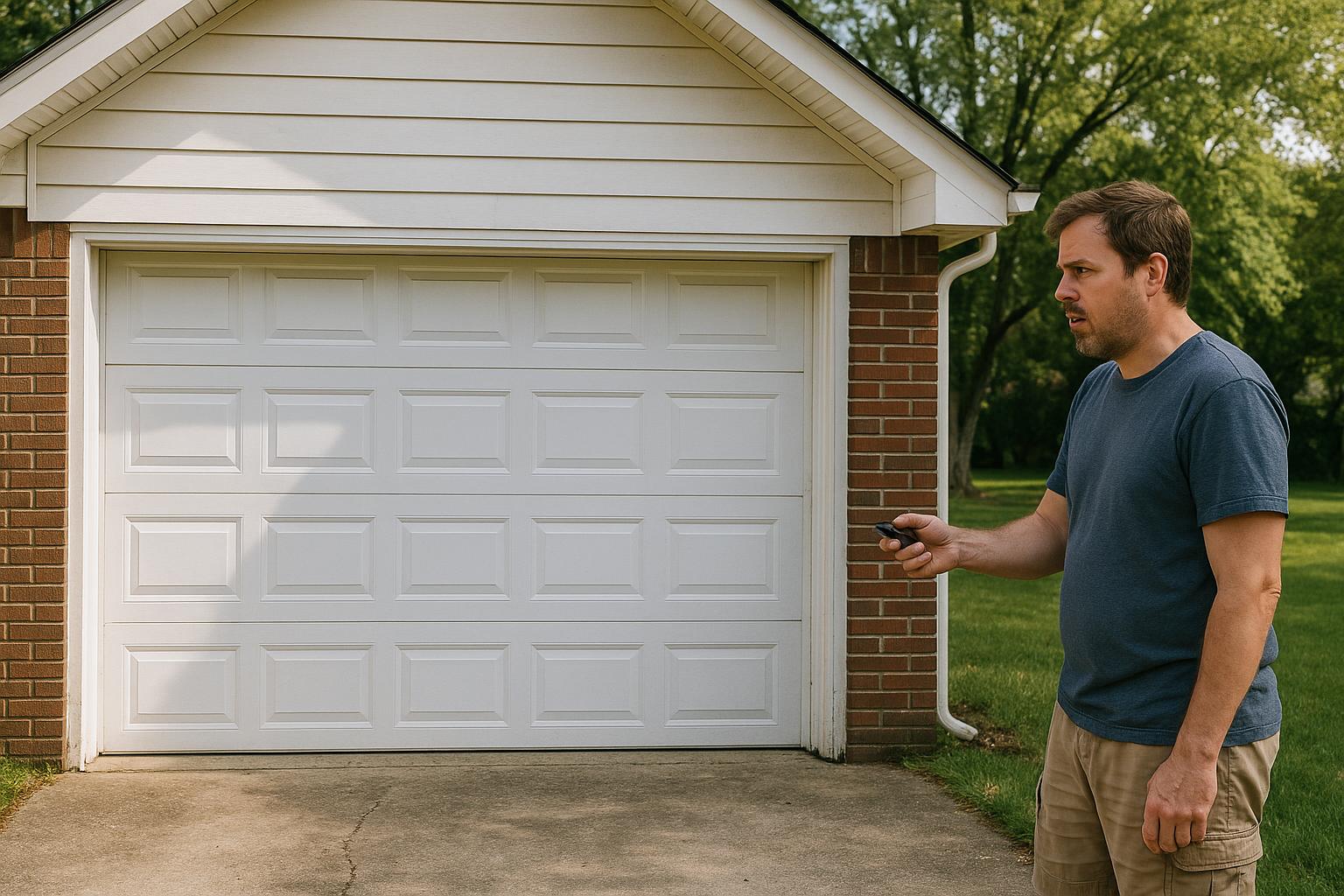
When Your Garage Door Stops Working, Don't Panic
You're running late for work, you press the button on your garage door opener, and nothing happens. Or maybe you pull into the driveway after a long day and your garage door refuses to close. Few home problems feel as urgent as a garage door that won't cooperate — especially when your car is trapped inside or your home is left exposed.
If you're a homeowner in Murfreesboro dealing with a stuck garage door, you're not alone. It's one of the most common service calls we receive, and the good news is that most causes are straightforward to diagnose and fix. Let's walk through the most common reasons your garage door won't open or close and what steps you should take.
1. Check the Remote and Wall Switch First
Before assuming the worst, start with the basics. If your garage door remote isn't working, try these quick checks:
- Replace the batteries. It sounds obvious, but dead remote batteries are one of the top reasons people think their garage door is broken.
- Test the wall switch. If the wall-mounted button works but the remote doesn't, the issue is with the remote itself — not the door or opener.
- Check your range. If you have to stand very close to the door for the remote to work, the remote's signal may be weak or the opener's antenna could be damaged.
If neither the remote nor the wall switch activates the door, the problem likely lies with the opener, the power supply, or the door's mechanical components.
2. Look for a Power Issue
Your garage door opener needs electricity to function. Check whether:
- The opener is plugged in. It may have been accidentally unplugged.
- The outlet is working. Plug in another device to test it.
- A circuit breaker has tripped. Head to your electrical panel and look for a tripped breaker.
- A GFCI outlet has tripped. Some garages use GFCI outlets that can trip during power surges or storms — common during Tennessee's spring and summer storm season.
If power is restored and the door still won't move, the issue is mechanical or related to the opener itself.
3. Inspect the Safety Sensors
Modern garage doors are equipped with photoelectric safety sensors near the bottom of the door tracks. These sensors prevent the door from closing if something is in the way — a critical safety feature, especially for families with children and pets.
However, these sensors can also prevent your door from closing when nothing is actually blocking it. Common sensor issues include:
- Misalignment. If the sensors are bumped or shifted, they may not "see" each other, and the door will refuse to close. Look for a blinking light on one or both sensors.
- Dirty lenses. Dust, cobwebs, or dirt on the sensor lenses can block the signal.
- Sun interference. Direct sunlight hitting a sensor can sometimes trick it into thinking there's an obstruction.
- Damaged wiring. Wires running to the sensors can become frayed or disconnected over time.
Try gently wiping the sensor lenses with a clean cloth and making sure both sensors are aligned and their indicator lights are solid. If the problem persists, a professional can test and replace the sensors quickly.
4. The Door May Be Off Its Tracks
If your garage door starts to move but then stops, jerks, or makes grinding sounds, it may have come off its tracks. This can happen due to:
- An impact — like accidentally bumping the track with a vehicle or heavy object
- Worn or loose rollers slipping out of the track
- Bent or warped track sections
Important: Do not try to force a garage door back onto its tracks yourself. A misaligned door under spring tension is dangerous and can cause serious injury. This is a job for a trained technician.
5. Broken Springs or Cables
If you hear a loud bang from your garage and the door suddenly won't open, there's a strong chance a torsion spring has snapped. Broken springs are one of the most common — and most dangerous — garage door failures.
Signs of a broken spring include:
- The door feels extremely heavy when you try to lift it manually
- The door opens a few inches and then stops
- You can see a visible gap in the spring above the door
- Cables appear loose or hanging
Garage door springs are under extreme tension and should never be repaired or replaced by someone without proper training and tools. If you suspect a broken spring, keep the door closed and call a professional right away.
6. The Disconnect Switch May Be Engaged
Every garage door opener has a manual disconnect switch — usually a cord or lever that allows you to operate the door by hand during a power outage. If this switch was accidentally engaged, the opener motor will run but the door won't move.
To fix this, simply re-engage the trolley by pulling the release cord toward the opener or manually sliding the trolley back into position until it clicks. Your owner's manual will have specific instructions for your model.
7. The Opener's Travel Limits Need Adjusting
If your garage door closes partway and then reverses, or if it doesn't open all the way, the opener's travel limit settings may need adjustment. These settings tell the motor how far the door should travel in each direction.
Most openers have small adjustment screws on the motor unit for up-travel and down-travel limits. Small adjustments can often solve the problem, but if you're unsure, it's best to have a technician handle it to avoid creating new issues.
When to Call a Professional
Some garage door issues are safe to troubleshoot on your own — replacing remote batteries, cleaning sensors, or resetting a tripped breaker. But many problems involve components under high tension or complex electrical systems that require professional expertise.
You should call a garage door technician if:
- A spring or cable appears broken
- The door is off its tracks
- The opener motor runs but the door doesn't move (after checking the disconnect)
- You've tried basic troubleshooting and the door still won't work
- The door is making unusual sounds or moving unevenly
At Murfreesboro Garage Door, we offer same-day and emergency service throughout Murfreesboro, Smyrna, La Vergne, and the surrounding communities. We know a stuck garage door can disrupt your entire day, so we prioritize fast response times and transparent pricing — no surprise fees.
Prevent Future Problems with Regular Maintenance
Many of the issues that cause a garage door to stop working can be prevented with routine maintenance. A professional tune-up once or twice a year can catch worn parts, lubricate moving components, tighten hardware, and test safety features before a small issue turns into an expensive repair.
If your garage door is giving you trouble or you'd like to schedule a maintenance visit, give us a call. We're here to help Murfreesboro homeowners keep their garage doors running safely and reliably all year long.