
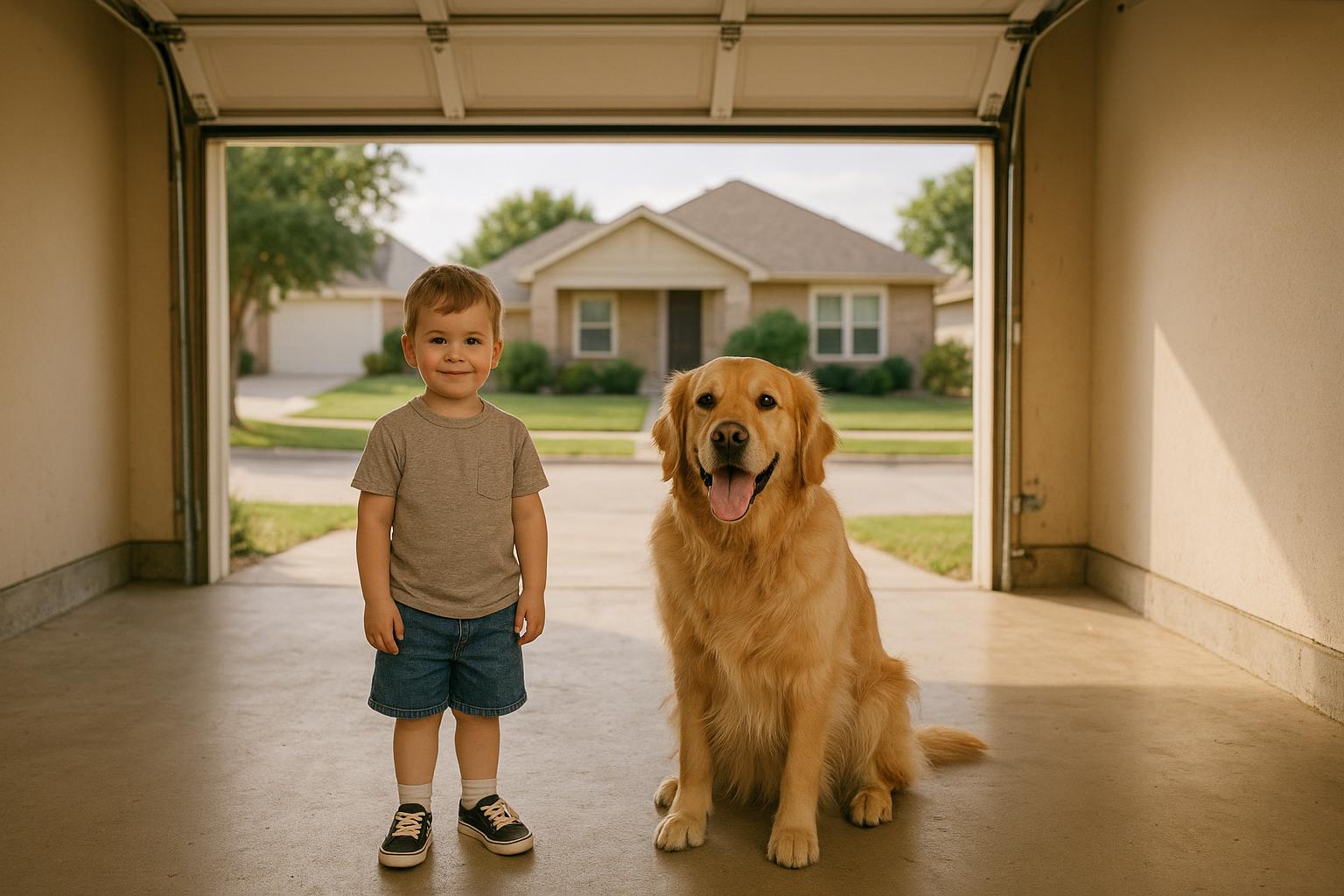
Your Garage Door Is Powerful — And That Demands Respect
Most homeowners in Murfreesboro use their garage door multiple times a day without thinking twice about it. But here's a fact that might change your perspective: the average residential garage door weighs between 150 and 400 pounds. That makes it the heaviest moving object in your home, and when something that heavy is in motion, the potential for injury is real — especially for curious kids and pets who don't understand the danger.
Every year, thousands of injuries are linked to garage doors across the United States. The good news is that nearly all of them are preventable. Whether you have toddlers running around or a dog that likes to dart in and out of the garage, a few simple precautions can make a big difference in keeping your family safe.
Common Garage Door Hazards for Kids and Pets
Before we get into solutions, it helps to understand where the risks actually come from. Here are the most common garage door hazards that affect children and animals:
- Entrapment under a closing door: A child or pet can easily run under a garage door as it's closing. If the auto-reverse system isn't working properly, the door may not stop in time.
- Pinch points between panels: As a sectional garage door opens and closes, the hinged panels create gaps that can pinch small fingers or paws.
- Exposed springs and hardware: Garage door springs are under extreme tension. Children who climb on or play near the door mechanism risk serious injury if a component fails.
- Remote controls and wall buttons: Kids love pressing buttons. An unsupervised child with access to a garage door remote or wall switch can activate the door unexpectedly.
- Gaps at the bottom of the door: Small pets can try to squeeze under a partially open or improperly sealed garage door, potentially getting trapped.
Essential Safety Features Every Garage Door Should Have
Modern garage doors and openers come equipped with safety features that weren't available even 15 or 20 years ago. If your Murfreesboro home has an older garage door system, it may be missing some of these critical protections.
Auto-Reverse Mechanism
Federal law has required garage door openers to include an auto-reverse feature since 1993. This means the door should automatically reverse direction if it contacts an object while closing. You can test this by placing a 2x4 flat on the ground in the door's path. If the door doesn't reverse after touching the board, your opener needs immediate attention.
Photoelectric Sensors
Also known as safety eyes, these sensors are mounted near the floor on both sides of the garage door opening. They project an invisible beam across the doorway, and if anything breaks that beam while the door is closing, the door reverses automatically. Over time, these sensors can become misaligned, dirty, or damaged — so regular checks are important.
Manual Release Handle
Every garage door opener should have a manual release that allows you to disconnect the door from the opener in an emergency. Make sure you know where it is and how to use it, but keep it out of reach of young children.
Pinch-Resistant Panels
Newer garage doors are designed with flush or recessed panel joints that minimize the gaps between sections. If your current door has wide gaps between panels when it's in motion, upgrading to a pinch-resistant design is worth considering — especially if you have young children.
Practical Safety Tips for Murfreesboro Families
Beyond having the right equipment, everyday habits play a huge role in garage door safety. Here are practical steps you can take right now:
1. Teach Kids That the Garage Door Is Not a Toy
It sounds simple, but it's the most important thing you can do. Make sure your children understand that the garage door is not something to play with, race under, or hang on. Explain the dangers in age-appropriate terms, and set clear rules about staying away from the door while it's moving.
2. Keep Remotes Out of Reach
Treat your garage door remote like you would any other potentially dangerous item. Store wall-mounted controls at least five feet off the ground, and don't leave portable remotes where kids can grab them. If you use a smartphone app to control your opener, make sure it's password-protected.
3. Always Watch the Door Until It Fully Closes
It's tempting to hit the button and walk away, but make it a habit to visually confirm that the door has closed completely before you go inside or drive away. This one habit alone can prevent most entrapment accidents.
4. Create a Pet-Safe Zone
If your dog or cat spends time in the garage, make sure they have a designated area away from the door's path. Never leave the garage door partially open as a way for pets to come and go — it creates both a safety risk and a security vulnerability.
5. Schedule Regular Maintenance
Safety features only work if they're in good condition. We recommend having your garage door professionally inspected at least once a year. A trained technician can test the auto-reverse, check sensor alignment, inspect springs and cables for wear, and identify potential hazards before they become emergencies.
When to Call a Professional
Some safety issues are easy to spot on your own — a sensor light that's blinking, a door that doesn't reverse when it should, or visible damage to panels and hardware. But other problems, like worn torsion springs or fraying cables, require professional expertise to diagnose and repair safely.
If you notice any of the following, it's time to call in a pro:
- The auto-reverse feature fails the 2x4 test
- Safety sensors aren't responding or their lights are off
- The door moves unevenly, jerks, or hesitates during operation
- You see gaps between panels that could catch fingers or paws
- Springs, cables, or brackets show signs of rust, wear, or damage
At Murfreesboro Garage Door, we work with families across Murfreesboro, Smyrna, La Vergne, and the surrounding communities to make sure their garage doors are operating safely and reliably. Whether you need a quick sensor realignment or a full safety inspection, we're here to help.
A Safe Garage Door Gives You Peace of Mind
Your garage door doesn't have to be a source of worry. With the right safety features in place, regular maintenance, and a few smart habits, you can protect the people and pets you care about most. If it's been a while since your garage door was inspected — or if you're not sure whether your system has up-to-date safety features — give us a call. We'll take a look and make sure everything is working the way it should, so you can open and close your door with confidence every single day.